
by Johnny Chen
You don’t need a garage full of gear to handle life’s little emergencies. Whether it’s a wobbly chair, a leaky faucet, or a picture frame that refuses to hang straight, most everyday problems come down to having the right tool within arm’s reach — and knowing how to use it. Here’s the “On the Rise” starter kit: the tools that punch way above their price tag and the ones worth upgrading first.
Why a Solid Toolkit Matters More Than You Think
A good toolkit isn’t about owning the most gear — it’s about owning the right gear. Skimping on tools usually costs you twice: once on the cheap tool that breaks, and again on the better one you eventually buy anyway. Start with fewer, better tools and build outward as real projects demand it.
The Hand Tool Non-Negotiables
These are the tools that solve 80% of household problems, and every one of them should live somewhere you can grab in under 30 seconds.
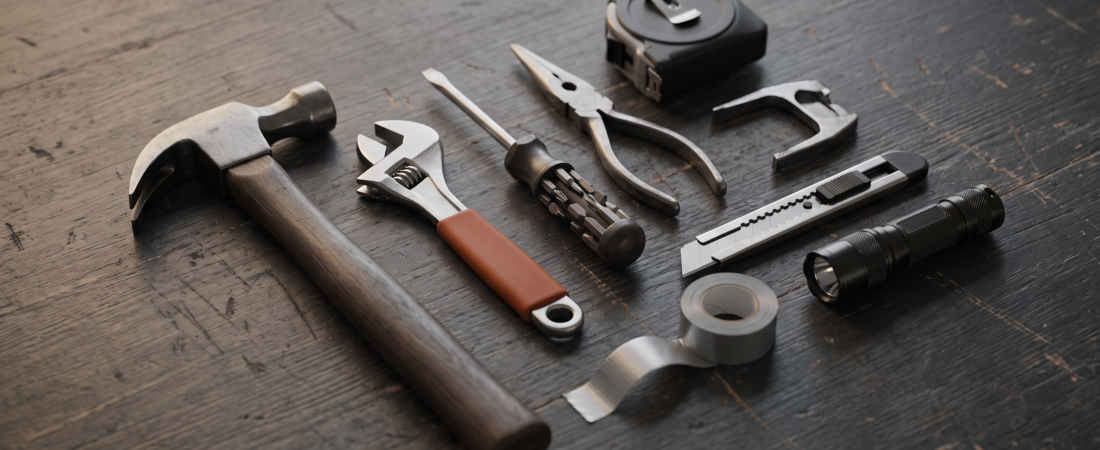
- A quality claw hammer (16 oz) — Not too light, not too heavy. Great for hanging shelves, light demo, and the occasional stubborn nail.
- An adjustable wrench and a small socket set — Furniture assembly, plumbing fixes, and tightening loose bolts on anything from a bike to a bed frame.
- A multi-bit screwdriver — One handle, a dozen tips. This alone replaces half a drawer of single-purpose screwdrivers.
- Needle-nose and slip-joint pliers — For gripping, bending, and reaching into spaces your fingers can’t.
- A retractable tape measure (25 ft) — Measure twice, buy once. Essential before any furniture, curtain, or shelf purchase.
- A utility knife with locking blade — Boxes, drywall, carpet trims — sharper and safer than kitchen scissors for the job.
Power Tools Worth the Investment
Once the basics are covered, these upgrades save the most time and frustration:
- A cordless drill/driver combo kit — The single biggest quality-of-life upgrade for a home toolkit. Look for at least a 12V battery system and two batteries so you’re never mid-project and dead in the water.
- A compact impact driver — If you’re assembling furniture often or working with longer screws, this takes the strain off your wrist and the drill.
- A small shop vac — Sawdust, drywall dust, and garage debris are inevitable. A shop vac turns cleanup from a chore into a two-minute job.
Everyday-Carry Tools That Punch Above Their Weight
Not every “tool” lives in a toolbox. A few small additions make daily life noticeably smoother:
- A compact multi-tool — Bottle opener, small blade, mini pliers, screwdriver — genuinely useful daily, not just for emergencies.
- A headlamp or small flashlight with magnetic base — Sticks to metal surfaces so both hands stay free under sinks, in engine bays, or behind furniture.
- Zip ties and a roll of quality duct tape — The most disproportionately useful items in any kit. Keep both in the car, not just the garage.
How to Choose Quality Over Marketing
A few quick filters when you’re shopping:
- Check the warranty. Lifetime warranties on hand tools (common with brands like Craftsman and Stanley) signal the manufacturer trusts their own build quality.
- Feel the weight and grip. Cheap tools often feel too light or have grips that shift under torque — pick it up before you buy if you can.
- Buy tools, not sets, for anything you’ll use often. Big all-in-one kits are great for rare-use items but often include filler pieces you’ll never touch.
- Read reviews for durability, not just price. A tool that’s $10 cheaper but fails in a year isn’t actually cheaper.
The Bottom Line
You don’t need to be a mechanic to think like one — you just need a toolkit that matches how you actually live. Start with the hand tool non-negotiables, add power tools as real projects come up, and keep a few everyday-carry essentials within reach. That’s the whole system: fewer tools, better chosen, always where you need them.
Got a tool you swear by that didn’t make this list? That’s what the comments are for — On the Rise is built on real advice from people who actually use this stuff.