
Your bathroom sink is holding water like a birdbath. The shower drain is backing up around your ankles. Your first instinct is to grab a jug of drain cleaner, or the baking soda and vinegar trick you saw online.
Put both down for a second. Most clogs come out faster, cheaper and safer with a couple of simple tools. Here’s how you do it.
Why baking soda and vinegar usually fail
That fizz looks powerful. It isn’t. When baking soda meets vinegar, you get carbon dioxide, water and a little salt, and nothing in that mix can dissolve hair or push through hardened grease (Abend Plumbing). The Spruce adds that the combo isn’t very effective and may even be hard on pipes (The Spruce). It’s fine for a freshen-up. It’s not a clog tool.
What you need
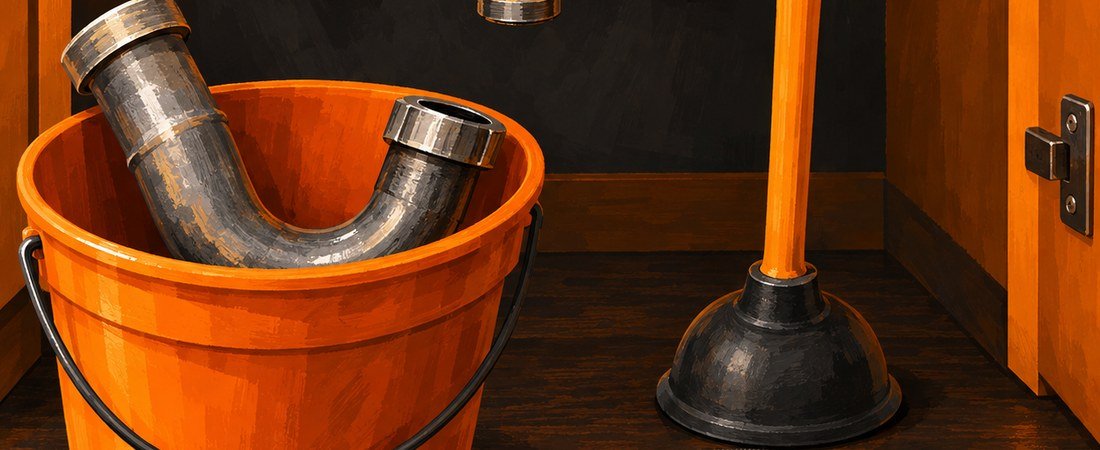
- A cup plunger for sinks and tubs (flat bottom, not the flanged toilet type)
- A plastic drain-cleaning strip, or a 1/4-inch hand drain snake
- A bucket, rubber gloves and a flashlight
- Channel-lock pliers for the trap, if needed
Method 1: Pull the stopper and clean it
In a bathroom sink, the clog is often sitting right on the pop-up stopper. Lift it out (some twist, some need you to unscrew the pivot nut under the sink). You’ll probably find a gross ring of hair and soap. Clean it off, run hot water and test. This fixes more sinks than you’d think.
Method 2: Plunge it the right way
- Put a little water in the basin, enough to cover the plunger cup.
- Block the overflow hole with a wet rag. If you skip this, you’re just pushing air out the top.
- Seal the plunger over the drain and give it 10 to 15 firm, straight pumps.
- Pull up sharply on the last one and check if the water drops.
Method 3: Snake it
For hair clogs in showers and tubs, a cheap plastic barbed strip works well. Slide it down, twist and pull slowly. For deeper clogs, a hand auger reaches farther. Feed the cable in until you feel resistance, crank it to grab the clog, then pull it back out rather than just pushing the mess deeper.
Method 4: Clean the P-trap
If a sink still won’t drain, the clog is probably in the curved pipe underneath.
- Put a bucket under the trap.
- Loosen the two slip nuts by hand or with pliers.
- Remove the trap, dump it and clean it out.
- Check the pipe going into the wall with a snake while you’re in there.
- Reassemble and hand-tighten, then run water and check for drips.
An option for slow drains: enzyme cleaners
If a drain is just sluggish rather than blocked, enzyme or bacterial cleaners break down fats, oils and food over time and are gentler on pipes than harsh chemicals (Yahoo Lifestyle). They’re slow, so think maintenance, not emergency.
Why skip harsh chemical drain cleaners?
Plumbing pros note that bleach doesn’t really clear blockages (Benjamin Franklin Plumbing), and caustic cleaners can splash, burn skin and sit in the pipe if they don’t work. That makes the next repair more dangerous for you or the plumber. If you already poured one in, tell whoever works on it next.
When to call a plumber
- Several drains back up at once
- You hear gurgling from other fixtures
- Water comes up in the tub when you flush
- The snake hits something solid it can’t grab
Those point to a main line problem, and that’s not a weekend DIY job.
The bottom line
Clean the stopper, plunge with the overflow blocked, snake it, then pull the trap. Four steps, a few bucks in tools and no chemical burns.
Home Repair — Johnny Chen, October 2, 2026