
The next time you open a bedroom door at 6:00 AM and it lets out a long, rusty squeal, you’ll know exactly what to do about it. A squeaky door hinge is metal rubbing on metal with nothing in between, and it’s one of the fastest repairs in the house. Most doors take 10 to 15 minutes, a few dollars in supplies and 1 tool you probably already own.
Here at On the Rise, the point of a Quick Fix is to get the job done right the first time, without wasting money or time. That means matching the method to how bad the squeak is, using a lubricant that actually lasts, and skipping the shortcuts that bring the noise back in 2 weeks.
How to fix a squeaky door hinge: match the method to the squeak
Not every squeak needs the same fix. Start with the lightest method that fits your door and move up only if you need to.
Light squeak: lube in place
Your door squeaks a little, only at certain points in the swing, and your hinges look clean. You can usually fix this without taking anything apart. Open the door, apply lubricant to the top of each hinge knuckle where the pin enters, and swing the door back and forth 10 to 15 times to work it in.
Persistent squeak: pull, clean and grease the pin
The squeak comes back within a few days of lubing in place, or you can see dark grime around the hinge knuckles. This means old dirt and dried oil are packed around your pin. You need to remove the pin, clean it and grease it. This is the fix most doors actually need.
Grinding or rust: clean hard or replace the pin
You hear a grinding sound, see orange rust on the pin, or the pin is hard to tap out. The surface is rough, and lube alone won’t smooth it for you. Clean the pin with steel wool or fine sandpaper, or replace it.
Sagging door: tighten first, then lube
If the door rubs the frame at the top corner or the latch doesn’t line up, loose hinge screws are part of the problem. A sagging door puts uneven pressure on the hinges and can make them squeak. Fix the screws first, then lube.
What you need before you start
You don’t need specialty products. We don’t play brand favorites here; any of these in the right category will work.
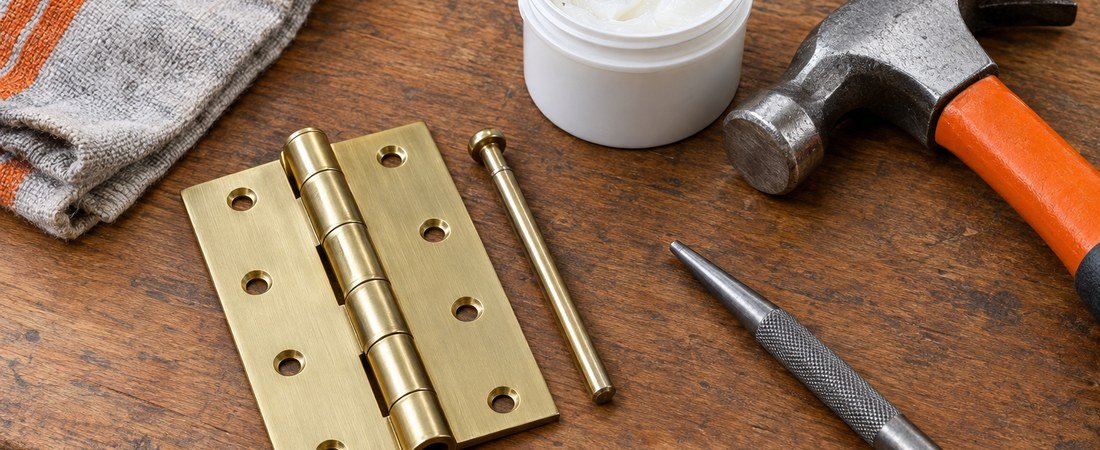
- Lubricant that lasts — white lithium grease (about $6.00 to $10.00) or silicone spray (about $6.00 to $9.00). Both stay put far longer than a light spray oil.
- Hammer — a standard 16 oz claw hammer.
- Nail set or thin screwdriver — about $4.00 to $8.00 for a nail set; used to tap the pin up from below.
- Rag or paper towels — for wiping off old grime and excess grease.
- Fine steel wool or 220-grit sandpaper — for rusted pins.
- Screwdriver — usually #2 Phillips, for tightening hinge screws.
- 3-inch wood screws (optional) — for fixing a sagging door, about $5.00 to $8.00 for a small box.
- Door wedge or book — to hold the door steady while the pin is out.
If you’re building out your basic toolkit, the On the Rise guide to essential tools for everyday tasks covers what’s worth owning.
Step-by-step: pull, clean and grease a hinge pin
Plan on about 5 minutes per hinge. Do 1 hinge at a time so the door never hangs from fewer than 2 hinges.
- Close the door and wedge it (1 minute). Closing your door keeps its weight supported by the frame and the latch. Slide a wedge or a thick book under the bottom edge so it can’t drop when the pin comes out. Skip this and the door can shift and bend the hinge leaves.
- Tap the pin up (1 minute). Place the tip of the nail set under the bottom of the hinge pin and tap upward with the hammer. Once the head lifts about 1/2 inch, pull the pin the rest of the way out by hand. If there’s a decorative cap on the bottom, remove it first.
- Clean the pin (1 minute). Wipe all the old grime off with your rag. If you see rust or the surface feels rough, rub it with steel wool or 220-grit sandpaper until it’s smooth, then wipe it clean. Prep before you grease: lube on a dirty pin just turns into paste.
- Clean inside the knuckles (30 seconds). Wipe out the hinge knuckles with a rag or a cotton swab. Packed dirt in the barrel is often the real source of the squeak.
- Grease the pin (30 seconds). Apply a thin, even coat of lithium grease along the full length of the pin. A thin coat is the rule; if you add more, it just drips and attracts dust.
- Reinsert the pin (1 minute). Slide the pin back in from the top and tap it down gently until the head sits flush.
- Work it in and wipe the excess (1 minute). Remove the wedge, swing the door 10 to 15 times, and wipe away any grease that squeezes out of the knuckles so it doesn’t stain the door or the trim.
Repeat for each hinge you have. Most interior doors have 3 hinges; most exterior doors have 3 or 4.
How to handle a sagging door the right way
If your door was rubbing or your latch was misaligned, tighten every hinge screw first, on both the door side and the frame side. If a screw spins without tightening, the hole is stripped.
The quick fix for a stripped hole is to swap that screw for a 3-inch wood screw on the top hinge, frame side. The longer screw passes through the door jamb and into the wall framing behind it, which pulls your door back toward the frame and holds it there. The top hinge carries the most load, so it’s the one that matters most.
Finishing: test it and set a schedule
Once all the hinges are done, swing the door slowly through its full range and listen at each point in the swing. If 1 hinge still squeaks, it’s usually that one: pull its pin again and check for rust you missed.
Interior door hinges typically stay quiet for 6 to 12 months after a proper clean and grease. Exterior doors see more moisture and dust, so check them every season. A 2-minute lube-in-place touch-up at the first hint of noise saves you the full job later.
Common mistakes that bring the squeak back
- Using a light spray oil as the only fix. Thin, penetrating sprays are great for loosening a stuck pin, but they evaporate or drip off quickly. The squeak often returns within days. You want a grease or silicone for the lasting coat.
- Lubing a dirty pin. Grease on top of old grime just makes a gritty paste that wears the hinge faster. Clean first, every time.
- Overdoing the grease. A thick coat drips down the door, stains the trim and collects dust. A thin coat is all the pin needs.
- Pulling all the pins at once. A door with no pins is a heavy slab of wood with nothing holding it. 1 hinge at a time is non-negotiable.
- Ignoring loose screws. A sagging door keeps stressing the hinges no matter how well they’re lubed. Tighten first.
You’ve got this
A squeaky door hinge is 1 of the most satisfying fixes in the house: 15 minutes, a few dollars, and the noise is gone. Match the method to the squeak, clean before you grease, use a lube that lasts, and work 1 hinge at a time. You’ve got this.
For more fast repairs, the On the Rise guide on how to fix a hole in your wall is a good next weekend project.
Johnny Chen, October 9, 2026